
MASTERING MOVEMENT
CAMERA MOVEMENT FOR THE URSA CINE IMMERSIVE
In traditional 2D filmmaking, camera movement is a stylistic choice. But in a 180° stereoscopic environment, you are effectively controlling the viewer’s physical head movement. Movement becomes a biological consideration.
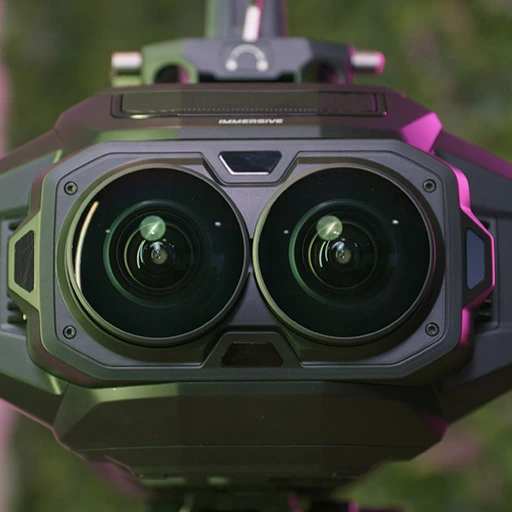
At Cinaglyph, we’ve spent countless hours testing the limits of the Blackmagic URSA Cine Immersive to understand what works (and what doesn’t) when it comes to moving the lens in a 3D space. That is why we have created this overview on how to correctly execute camera movement for the URSA Cine Immersive.
WHY PERFECTING MOVEMENT IS NON-NEGOTIABLE
In traditional cinema, a shaky camera might be a stylistic choice to convey tension. In immersive 180° cinematography, that same shake is a technical failure. But why is it so critical to get it right?
You are the Viewer’s Vestibular System: When someone puts on a headset like the Apple Vision Pro, their brain fully commits to the environment. If you move the camera, you are literally moving their inner ear. Any jitter, unplanned tilt, or sudden acceleration creates a violent conflict between what the eyes see and what the body feels.
The “One-Way Ticket” to Motion Sickness: Bad movement causes “simulated sickness” almost instantly. Once a viewer feels nauseous, the immersion is broken, and they are unlikely to put the headset back on. Doing it “right” isn’t about aesthetics; it’s about physical comfort.
Presence is Fragile: The goal of immersive video is presence—the feeling of actually being there. Mechanical, smooth movements preserve this illusion. Organic, shaky, or unpredictable movements remind the viewer they are looking at a screen, shattering the magic of spatial storytelling.
At Cinaglyph, we don’t just move a camera; we manage the viewer’s equilibrium. We understand that every centimeter of movement must be calculated to maintain the delicate balance between a dynamic shot and a comfortable experience. That’s why mastering camera movement for the URSA Cine Immersive is so important.
THE BIOLOGY OF IMMERISVE MOVEMENT
The primary challenge of immersive cinematography is the “vestibular mismatch.” When the camera moves, the viewer’s eyes signal to the brain that the body is in motion. However, their inner ear (the vestibular system) tells them they are sitting still.
To minimize motion sickness and maximize presence, we aim for mechanical predictability. This means prioritizing linear movements from Point A to Point B with constant velocity. Abrupt starts, stops, or rotational “shakes” can immediately break the immersion and cause discomfort.
01. Motorized Rails and Sliders
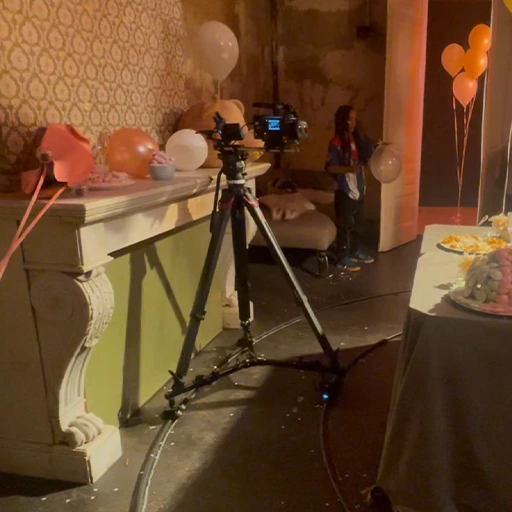
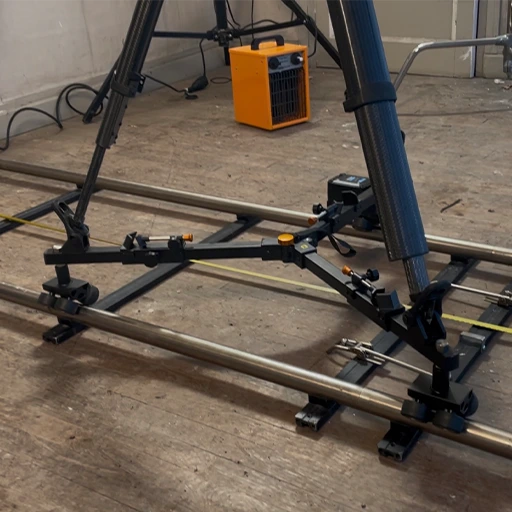
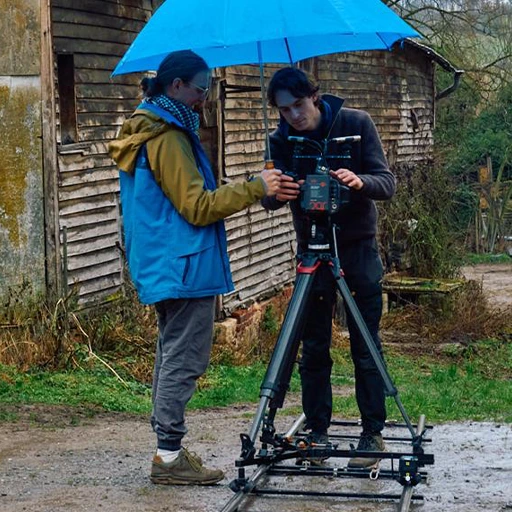
We believe rails are the gold standard for high-end production. By utilizing a motorized slider, we provide perfectly consistent camera movement for the URSA Cine Immersive. This mechanical precision ensures that the spatial footage remains comfortable and easy for the human brain to process in an immersive headset.
The primary challenge: because of the ultra-wide 180° field of view, the tracks are always visible in the frame.
Our Approach
"We use strategic set design or advanced post-production 'clean plates' to hide the hardware, ensuring the viewer only sees the world you created."
02. Heavy-Lift Drones
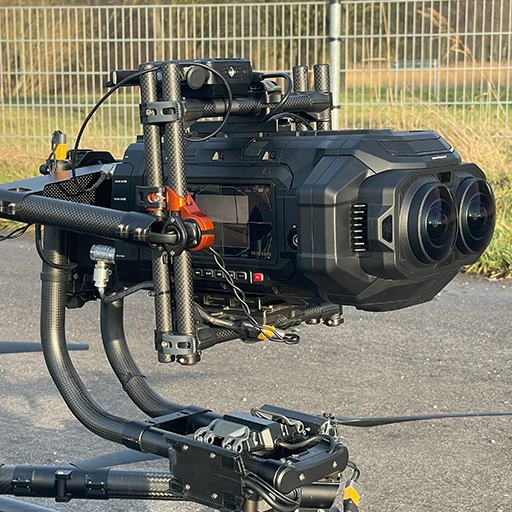
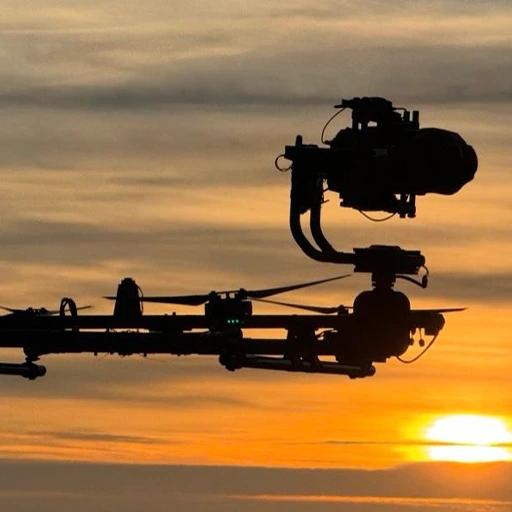
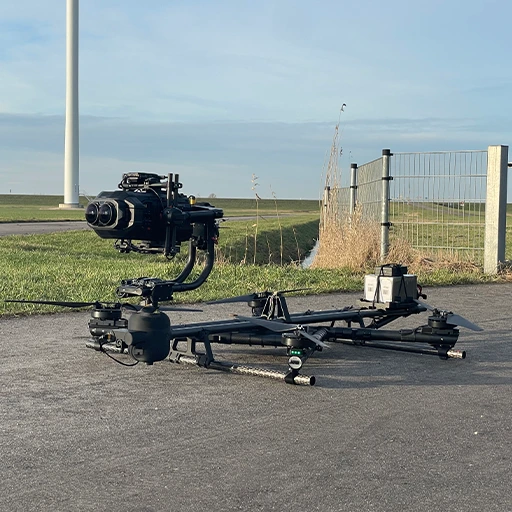
Taking the URSA Cine Immersive into the air requires a specialized, heavy-lift UAV and a world-class flight crew. Drones offer a sense of scale that is unmatched, perfect for landscape reveals.
The challenge lies in the sheer size of the rig, making it sensitive to wind and environmental factors like prop wash.
Our Approach
"We treat drone shots as high-precision maneuvers, focusing on smooth, wide arcs rather than jerky, fast-paced flight paths."
03. Dolly and Gimbal Systems
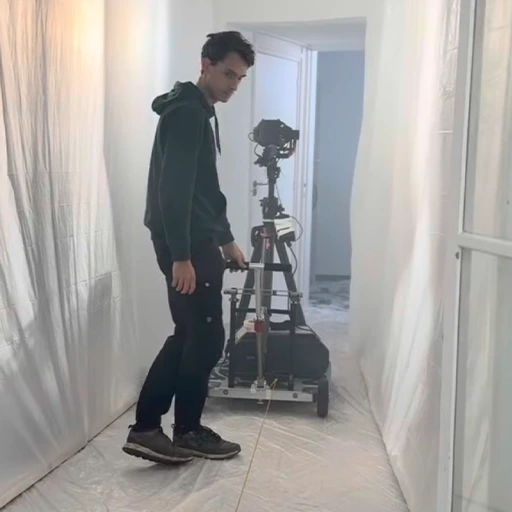
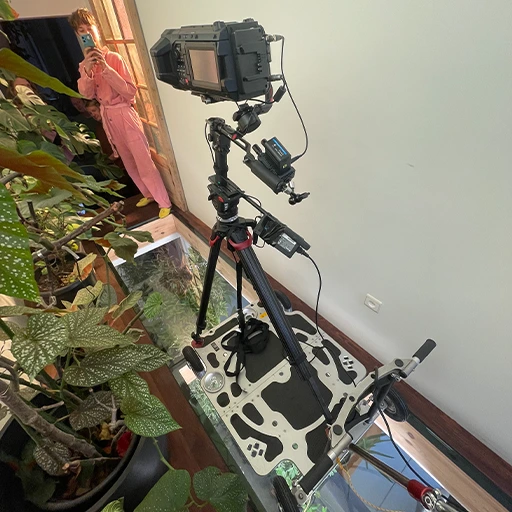
The dolly is a classic solution that remains incredibly effective. It provides a stable, grounded feel. When combined with a heavy-duty gimbal, it produces a very "solid" world-view.
However, you are limited to completely flat, prepared surfaces. Any bump in the floor will be magnified tenfold in a VR headset.
Our Approach
"Before every shoot, we make sure that the surface is perfectly flat, ensuring the best results."
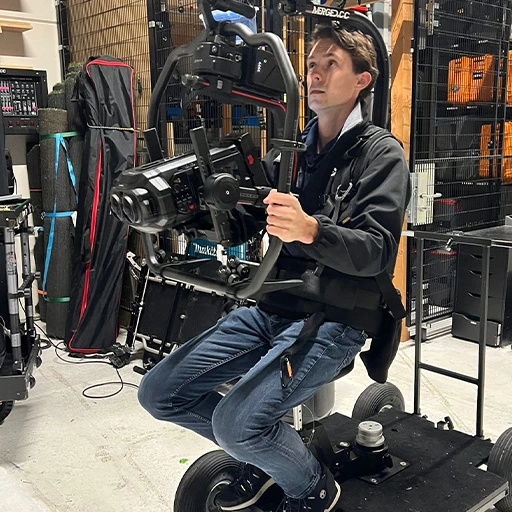
04. Steadicam
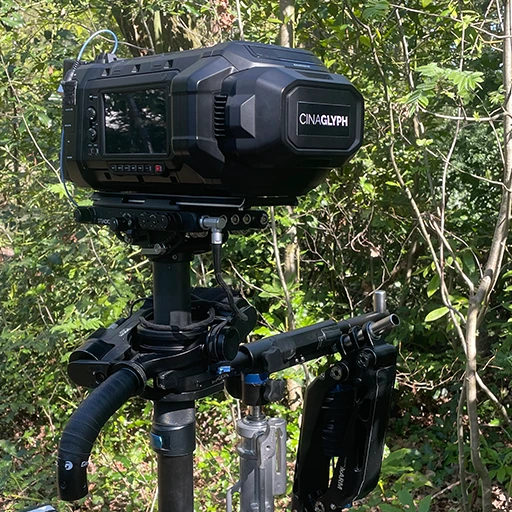
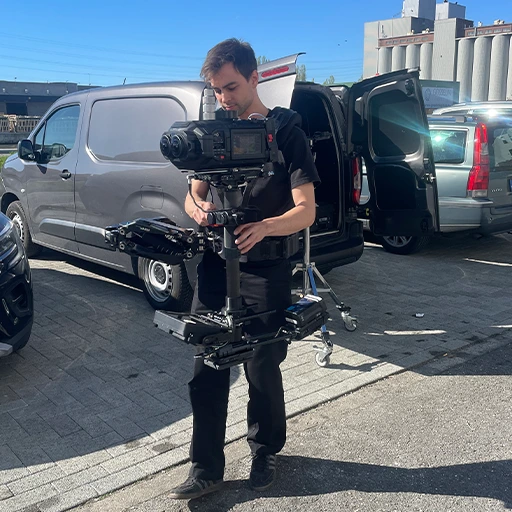
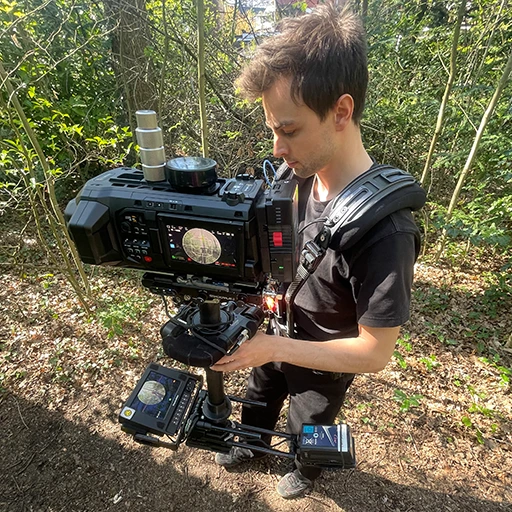
The Steadicam offers an 'organic' feel, ideal for narrative immersion where you want the viewer to feel like a character in the room. This setup provides a more natural camera movement for the URSA Cine Immersive, allowing us to navigate tight spaces that would be inaccessible with larger rigs.
The challenge is that "sway" is the enemy. It requires a highly skilled operator who understands immersive physics.
Our Approach
"We use Steadicam only when the story calls for a 'human' perspective, ensuring a strict linear path to protect the viewer's equilibrium."
The Future of Movement
In the rapidly evolving landscape of spatial computing, the distinction between a simple video and a true immersive experience is defined by these technical nuances. Mastering camera movement for the URSA Cine Immersive isn't just about owning the hardware; it's about deeply understanding the viewer's biology and respecting the physical boundaries of a virtual world.
At Cinaglyph, we bridge the gap between creative ambition and technical feasibility. We ensure that your story is not only visually breathtaking but also physically comfortable, creating a lasting impact that feels as real as the world around us.
Filmmaking is a team sport
Ready to step into the 180° realm?
Whether you have a fully-fleshed script or just the seed of an idea, our creative and technical team is ready to guide you through the immersive production process.

Written by RICK
As the founder of Cinaglyph, Rick combines a passion for immersive film with a mission to educate. He writes to give partners the tools and understanding they need to collaborate effectively, turning ambitious concepts into high-impact immersive realities.